

Snow and Ice Storm Towing in Georgia: What Happens When Atlanta Roads Freeze
Two inches of snow shut down metro Atlanta for days in January 2014, an event Atlantans still call Snowmageddon. Georgia’s roads simply aren’t built or driven the way northern roads are, which means even a light ice event can strand cars, overwhelm towing capacity, and turn a normal 30-minute wait into hours. Towing itself doesn’t get dramatically pricier during a storm; standard rates plus the usual after-hours surcharge generally still apply, and Georgia law actually prohibits price gouging during a declared state of emergency. The real risk during an ice storm isn’t cost; it’s availability, since every towing company in the metro faces the same surge in calls at once.
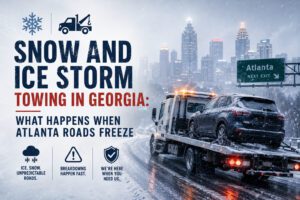
Atlanta doesn’t get much winter weather, and that’s precisely the problem. A city built and driven for warm-weather conditions has neither the road treatment infrastructure nor the collective driving experience that snowier regions take for granted, which means a storm that would barely register in Minneapolis or Chicago can paralyze the entire metro.
Why a Little Ice Paralyzes Atlanta When Snow Doesn’t Elsewhere
On January 28, 2014, a storm that produced only about two to three inches of snow trapped cars on metro Atlanta interstates for close to 24 hours. Authorities responded to more than 200 accidents in a single afternoon as the snow turned to slush, then sheets of ice, right as schools let out and most of the metro tried to drive home simultaneously. The event, now known simply as Snowmageddon, wasn’t caused by an unusually severe storm. It was caused by a combination of minimal road pretreatment, drivers unfamiliar with icy conditions, and everyone hitting the roads at the same moment.
That combination is precisely why ice, not snow volume, is the real hazard in Georgia. A dusting of snow that melts and refreezes overnight creates black ice on bridges and overpasses that’s nearly invisible until a vehicle is already sliding, and Atlanta’s hilly terrain and dense interstate interchanges make that situation worse than flatter, less congested cities would experience with the same weather.
What Happens to Towing Demand During a Winter Storm
Every towing company in the metro faces the identical problem during an ice event: call volume spikes sharply while road conditions simultaneously slow down every truck trying to respond. A normal day’s call volume can double or triple within a few hours as vehicles slide off roads, get stuck on hills, or simply won’t start in the cold, and every one of those calls is competing for the same limited number of trucks that can safely navigate icy roads in the first place.
This is different from a typical rush-hour surge. During a storm, trucks themselves face the same hazardous conditions as everyone else, which means response times that are normally 30 to 45 minutes can reasonably stretch to several hours, not because of poor service, but because physics and safety limit how fast any vehicle can move on ice.
How GDOT Prepares Now vs. 2014
Georgia’s response to winter weather changed substantially after Snowmageddon exposed how unprepared the state was. The Georgia Department of Transportation now maintains a dedicated winter weather response program, with response teams monitoring and treating interstates and state routes ahead of and during winter storms, a stark contrast to 2014, when the state had virtually no brine stockpile and pretreated only a fraction of the road network before that storm hit.
That preparation genuinely helps, but it doesn’t eliminate the fundamental problem: Atlanta drivers still have far less collective experience with icy roads than drivers in snowier climates, and pretreated roads can still ice over faster than expected once temperatures drop and precipitation continues. Checking 511GA before heading out during any winter weather advisory remains the single most useful step a driver can take.
Is Surge Pricing During a Storm Legal? Georgia’s Price Gouging Law.
A common assumption during any emergency is that prices for essential services quietly spike, and towing sometimes gets lumped into that assumption. In Georgia, that’s not legally permitted once a state of emergency is declared. Georgia law prohibits businesses from charging more for goods and services identified by the Governor during a declared state of emergency than they charged immediately before the emergency was declared, with violations investigated by the attorney general’s Consumer Protection Division and fines ranging from $2,000 to $15,000 per violation.
Standard after-hours and weather-related surcharges that already exist in a towing company’s normal pricing structure are not the same as price gouging, and those can still apply during a storm the same way they would during any other after-hours call. What the law prevents is a company inventing a new, inflated rate specifically because a state of emergency has been declared.
What Ice Storm Towing Actually Costs
During a declared emergency, expect standard local towing rates plus the same after-hours or weather surcharge that would apply on any other night requiring an off-hours response, generally in the same $75 to $200 range most local tows already fall into depending on distance and vehicle type. The bigger cost consideration during a storm isn’t the per-tow price; it’s how long a vehicle might sit stranded before any truck can safely reach it, which is an availability problem rather than a pricing one.
If You’re Stranded During an Ice Storm
Stay with your vehicle if you’re stuck on a roadway. Leaving a vehicle on an active road during icy conditions creates a hazard for both you and other drivers, and emergency crews mostly expect vehicles to remain in place unless actively unsafe to do so.
Run the engine sparingly to conserve fuel. Short intervals of heat rather than continuous running can extend how long you can stay warm while waiting.
Check 511GA before assuming a tow is your fastest option. In a widespread event, waiting for road conditions to improve slightly, or for GDOT crews to treat your specific stretch of road, may get you moving again faster than a tow truck can physically reach you.
Call for a tow once conditions allow a safe response, and expect a wait. Being upfront that you understand response times are extended during a storm helps dispatch prioritize based on actual urgency across the whole queue, not just call order.
Coverage Across Metro Atlanta and Surrounding Counties
PMA Transportation Services responds to winter weather calls across metro Atlanta and the surrounding counties, including Midtown (30308), Buckhead (30305), Decatur (30030), Marietta (30060), Lawrenceville (30044), and Woodstock (30188), with standard pricing maintained regardless of storm conditions, consistent with Georgia’s price gouging protections.
Why PMA Transportation Services
PMA Transportation Services operates 24/7 year-round, including during winter weather events, with pricing that doesn’t change simply because a storm has been declared. During high-demand periods like an ice storm, response times reflect genuine road safety conditions affecting every provider in the metro, not an attempt to prioritize based on anything other than safety and queue order.
Snow and Ice Storm Towing in Georgia Frequently Asked Questions
Why does a small amount of snow shut down Atlanta?
Primarily because of ice, not snow volume. Georgia’s roads see far less winter weather than northern states, so drivers have less experience with icy conditions, and black ice on bridges and overpasses can form quickly and remain nearly invisible.
Does towing cost more during an ice storm in Georgia?
Standard local rates plus the usual after-hours surcharge generally still apply. Georgia law prohibits price gouging during a declared state of emergency, so a company can’t invent a new inflated rate specifically because of the storm.
Why do tow trucks take so much longer to respond during a storm?
Trucks face the same icy, hazardous road conditions as every other vehicle, which physically limits how fast they can safely travel, on top of a sharp increase in call volume as more vehicles slide off roads or get stuck.
What should I do if I’m stranded during a winter storm?
Stay with your vehicle if you’re on an active roadway, run the engine sparingly to conserve fuel, and check 511GA for road condition updates before assuming a tow is your fastest path to safety.
Has Georgia improved its winter storm response since 2014?
Significantly. GDOT now maintains a substantial brine stockpile and pretreats major routes ahead of storms, a large change from 2014’s Snowmageddon, when the state had almost no brine reserves in place.
Keep Reading
- 24-Hour Emergency Towing Near Me: Metro Atlanta Response Times
- Accident Towing in Atlanta: What It Costs and What Insurance Covers
- How Much Does Towing Cost? Guide by Service Type
Stranded in winter weather? Contact PMA Transportation Services or view our full towing and roadside services. Call (844) 762-8726, available 24/7, year-round.